
For a pressure-hose RFQ, identify both ends separately and connect each one to the actual mating equipment reference. Request the supplier’s connector description and applicable drawing for each interface, with unresolved fields visible. A similar-looking fitting or a shared product category cannot establish compatibility, sealing design or an approved operating configuration.
Give the two ends stable names in the enquiry
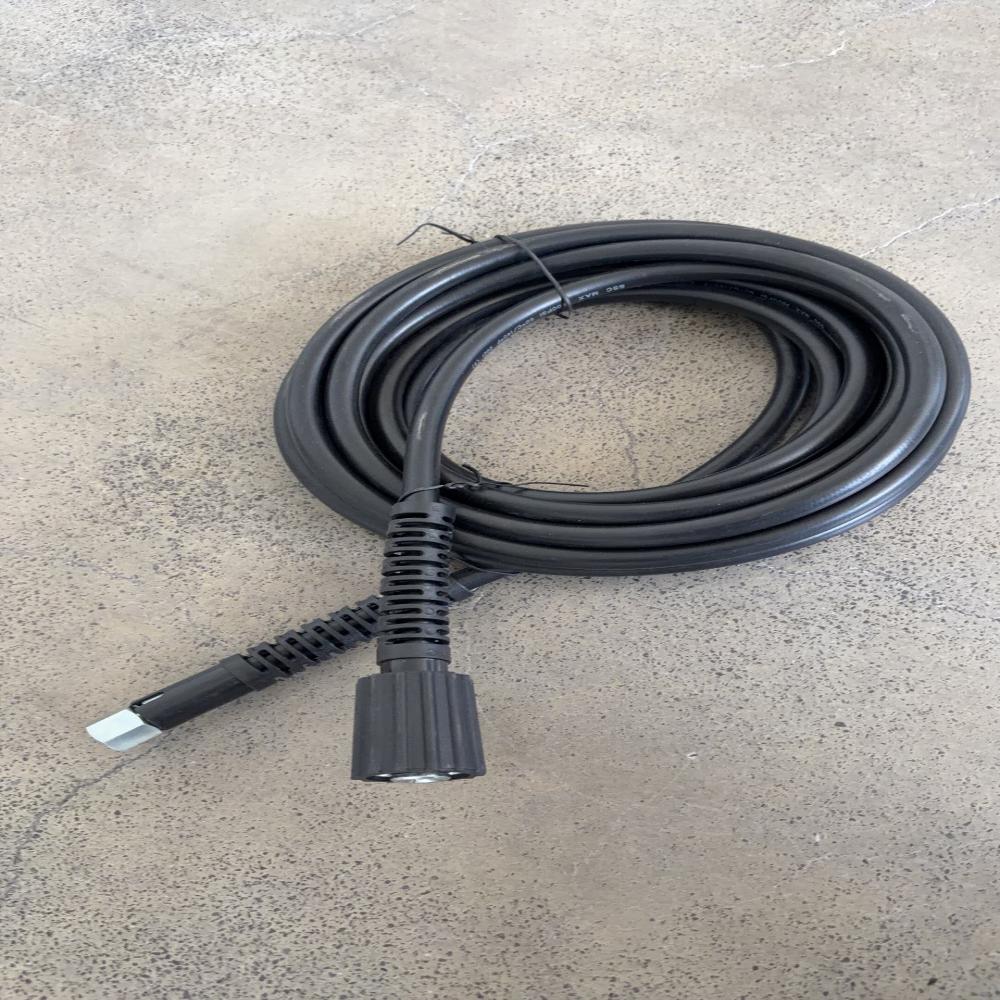
Fuwei’s High-Pressure Hose listing provides an actual product reference and a photograph showing a coiled hose with two end presentations. Use that reference to start the enquiry, then name the ends consistently, for example as buyer reference End A and End B. Those labels organise the record; they are not supplier part numbers or technical classifications.
A buyer seeking wholesale high-pressure hose for cleaning machines needs the supplier to identify the actual offered assembly. Retain its model or version reference beside the two-end record. Do not assume the two ends are identical, or assign their connection types from a photograph. Leave those details for an attributable supplier description and the relevant technical documentation.
Identify what each end is proposed to meet
Record the exact equipment or component proposed for each side of the hose. Use its actual model, part reference and interface document where available. A broad description such as washer end can become ambiguous when several machines or accessories are considered. If the buyer does not yet have the mating reference, mark it missing instead of substituting a catalogue image of a similar unit.
Fuwei lists a washer and a drain-cleaning hose separately from this pressure-hose reference. Their presence in a related-products area does not approve a particular combination. A supplier proposal should identify the relationship explicitly and provide the applicable information for the responsible technical reviewer. Keep that proposed relationship distinguishable from an accepted configuration.
Request an interface record for each end
Request the actual designation and supporting drawing rather than choosing a familiar standard yourself. A drawing reference should identify which end it describes and its revision. Where connection terminology is unclear, ask the supplier to reconcile the wording and drawing. Do not create an adapter recommendation or a connection procedure merely to close a blank field in the RFQ.
Interface field | End A record | End B record
Supplier identity | Actual connector or assembly reference | Separate actual reference
Mating item | Identified equipment/component and version | Identified equipment/component and version
Technical definition | Supplier description and applicable drawing | Supplier description and applicable drawing
Connection details | Dimensions, designation and sealing reference as supplied | Details for this end, not copied from End A
Review state | Proposed, confirmed identity or unresolved | Separate state and open questions
Keep visual identity separate from technical definition
The product photograph can help locate an end or distinguish the assembly under discussion. It cannot reliably establish a thread pitch, internal dimension, sealing surface or pressure capability. Even a visible marking may need an attributable explanation for the actual offered part. Retain the image as a locating reference while keeping the technical fields attached to their own sources.
If a closer view is needed, state the question it should answer and request a version-specific image. A close photograph can still leave a technical value unresolved. The record should show what the supplier actually provided, what the responsible reviewer assessed and which questions remain. Do not describe an appearance comparison as a completed compatibility or pressure assessment.
Reconcile the documents before comparing offers
Compare each proposal against the same two mating references. A different connector configuration should remain a clearly identified alternative, even if the supplier uses the same general hose name. Keep End A and End B in the same orientation throughout the comparison so details do not switch columns when documents are forwarded or translated.
Ask whether any proposed change affects the assembly designation and supporting technical documents. Retain the earlier response and the replacement revision. Interface identity is only one part of evaluating an offered hose assembly; applicable ratings and conditions need their own supplier information and technical review. This RFQ record supplies no installation steps, testing procedure or operating approval.
A concise interface-information request
Use the actual product enquiry and contact links below to send the record. The useful output is an attributable interface description for a defined proposal. It does not establish that pictured components can be joined, that a pressure claim applies to the complete arrangement, or that missing technical information can be replaced by visual resemblance.
• Identify the actual hose assembly and label its two ends consistently.
• Name the proposed mating item on each side, with the relevant model or document reference.
• Request the supplier’s actual connector definition and applicable drawing for each end.
• Preserve alternatives and unresolved fields until the responsible technical review is complete.
Frequently asked questions
Can the photograph establish connector dimensions?
No. Use it to identify the location being discussed and request the actual supplier definition and applicable drawing.
Can both ends share one technical description?
Only where the supplier explicitly confirms that scope for the actual assembly. Keep separate end records so an unconfirmed difference is not hidden.
Does a related washer listing establish compatibility?
No. Identify the actual mating equipment and obtain the relevant proposal and technical documentation for review.
Does an interface record approve pressure operation?
No. It records interface identity and evidence. Applicable ratings, conditions and technical acceptance remain separate requirements.
Product and contact references
https://fwwasher.com/product/high-pressure-hose/
https://fwwasher.com/product/high-pressure-washer/
https://fwwasher.com/contact/
https://fwwasher.com/blog/